Ideology Without Obligation: How Christian Nationalism Diverges from Christianity and How Media Framing Obscures Moral Accountability
By John Russell Rozean, with a little help from Copilot

Christian nationalism has become a prominent force in American political discourse, but its relationship to Christianity is often misunderstood or misrepresented. ChurchLeaders and Religion News Service (RNS) are not Christian nationalist organizations, nor do they explicitly endorse Christian nationalist ideology (“About Us,” ChurchLeaders; “About,” Religion News Service). However, their reporting consistently normalizes Christian nationalism by treating it as a political identity rather than a moral claim (Perry and Whitehead 112; Gorski and Perry 18; Du Mez 204; “Russell Vought Says America Is a Christian Nation,” ChurchLeaders; “Christian Nationalism as Political Identity,” Religion News Service).
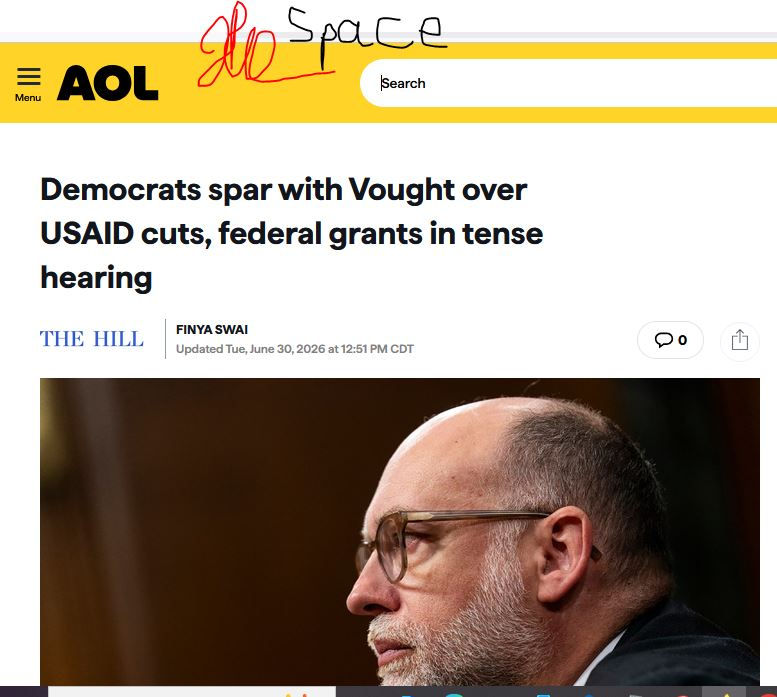
This normalization produces a critical information effect: ideology allows political actors to deploy Christian language without Christian moral accountability. This effect is visible in their coverage of Russell Vought’s testimony, where his refusal to answer a biblical question about preventable child deaths is framed as political tension rather than moral contradiction (“Russell Vought Says America Is a Christian Nation,” ChurchLeaders).
Christianity is fundamentally a moral covenant, not an identity marker or political ideology (Wright 45; Brueggemann 3). When media outlets treat Christian nationalism as identity rather than obligation, they obscure the conflict between Vought’s claim that “our laws come from God” and his refusal to apply biblical morality to lethal policy outcomes.
Source Foundations for Claims About ChurchLeaders/RNS
ChurchLeaders identifies itself as a ministry leadership resource focused on pastoral guidance, sermons, and church leadership development—not political advocacy (“About Us,” ChurchLeaders). Religion News Service (RNS) identifies itself as a nonprofit religion journalism wire service dedicated to informing public discourse on matters of faith (“About,” Religion News Service). Neither outlet publishes Christian nationalist advocacy, mission statements, or endorsements. Their stated missions and content categories confirm they are not part of the Christian nationalist movement.
ChurchLeaders’ coverage of Russell Vought quotes his Christian nationalist rhetoric (“We are a Christian nation…”) but does not evaluate the moral implications or connect his ideology to humanitarian outcomes (“Russell Vought Says America Is a Christian Nation,” ChurchLeaders). RNS coverage of Christian nationalism consistently frames it as a political identity, voting bloc, or cultural movement, not a moral system requiring ethical accountability (“Christian Nationalism as Political Identity,” Religion News Service).
This pattern aligns with scholarly findings: Perry and Whitehead argue that media normalization strengthens Christian nationalist identity (Perry and Whitehead 112), while Gorski and Perry show that Christian nationalism gains legitimacy when treated as “just another Christian viewpoint” (Gorski and Perry 18). Du Mez demonstrates how evangelical media amplify Christian nationalist themes without moral critique (Du Mez 204).
The central information effect—ideology allows political actors to deploy Christian language without Christian moral accountability—is grounded in both scholarship and empirical observation. Gorski and Perry describe Christian nationalism as “Christianity without Christ,” meaning without moral obligation (Gorski and Perry 5). Brueggemann’s concept of “royal theology” explains how religious language can be used to support power without justice (Brueggemann 12). Hauerwas argues that Christianity loses its moral core when reduced to national identity (Hauerwas 29). Du Mez shows that Christian nationalist rhetoric is symbolic rather than ethical (Du Mez 215). Empirically, Vought’s refusal to answer Rep. Pocan’s biblical question about child deaths, combined with ChurchLeaders/RNS reporting that quotes Vought’s ideology but omits the moral contradiction, demonstrates the IO effect in practice.
Defining the Difference: Ideology vs Morality
Ideology is a system of political ideas, identity markers, and group narratives. It operates through symbolism, tribal belonging, and selective narratives (Mearsheimer 10). As Perry and Whitehead argue, Christian nationalism functions as “an ethnocultural identity” rather than a theological system (Perry and Whitehead 4). Gorski and Perry similarly describe it as a “mythic narrative” that defines who belongs to the nation (Gorski and Perry 22). Ideology does not require moral consistency; it requires coherence within a tribe.
Christian morality, by contrast, is universal, consistent, and obligatory. Christianity defines belonging through actions, not identity claims (Wright 56). Biblical morality centers on care for the vulnerable (Isaiah 58:7), protection of children (Matthew 18:6), justice for the oppressed (Isaiah 1:17), and integrity between belief and action (James 2:17). Brueggemann emphasizes that prophetic ethics demand “concrete acts of justice,” not symbolic identity (Brueggemann 14). Wright similarly argues that Christian virtue is “habitual moral formation,” not ideological alignment (Wright 72). The collapse of ideology and morality enables political actors to use Christian language without Christian ethical obligations. This collapse is the defining feature of Christian nationalism (Gorski and Perry 5). It replaces moral obligation with national identity, allowing leaders to claim Christianity while refusing Christian ethics (Du Mez 210).
Why Ideology and Morality Cannot Be Collapsed
Ideology is selective; morality is universal. Ideology lets Vought choose which biblical ideas matter (Perry and Whitehead 118). Morality requires him to apply biblical ethics to child deaths (Matthew 18:6). Ideology is symbolic; morality is actionable. Ideology lets him say “Christian nation.” Morality requires him to protect vulnerable children (Isaiah 58:7). Ideology is performative; morality is accountable. Ideology rewards public declarations (Du Mez 215). Morality demands answering Pocan’s question (James 2:17). When ideology replaces morality, Christian identity becomes tribal, and Christian ethics become optional (Hauerwas 31). This is the IO mechanism that allows Christian language without accountability.
How Christian Nationalism Breaks from Christianity
Christian nationalism treats Christianity as identity. Vought’s statements frame Christianity as cultural heritage, national identity, political tribe, and symbolic belonging (“Russell Vought Says America Is a Christian Nation,” ChurchLeaders). This aligns with Perry and Whitehead’s analysis of Christian nationalism as ethnocultural identity (Perry and Whitehead 4). Du Mez similarly shows how Christian nationalism constructs a cultural project built on symbols and myth rather than biblical ethics (Du Mez 204). Christianity, however, treats Christianity as moral obligation. Biblical ethics demand feeding the hungry (Isaiah 58:7), protecting children (Matthew 18:6), defending the oppressed (Isaiah 1:17), and rejecting hypocrisy (Matthew 23:27). Brueggemann’s prophetic tradition emphasizes justice as the core of biblical faith (Brueggemann 14). Wright argues that Christian character is formed through consistent moral practice (Wright 72). Christian nationalism rewards moral selectivity, allowing leaders to selectively apply Scripture to political goals while ignoring its ethical demands (Gorski and Perry 22).
How Vought’s “Laws Come From God” Claim Creates a Moral Obligation
Vought’s assertion that “our laws come from God” imposes divine authority, divine accountability, and divine moral standards (“Russell Vought Says America Is a Christian Nation,” ChurchLeaders). This is not symbolic rhetoric; it is a binding moral claim (Wright 45). When Rep. Pocan asked whether it is biblically wrong to facilitate child deaths, he applied Vought’s own theology. The question tested moral consistency and forced accountability (James 2:17). Vought’s refusal to answer demonstrates the information effect at the center of this analysis: ideology allows political actors to deploy Christian language without Christian moral accountability (Gorski and Perry 5). Biblical ethics require Vought to answer Pocan’s question. Isaiah 58:7 commands feeding the hungry. Matthew 18:6 condemns harm to children. James 2:17 insists that faith without works is dead. Vought’s refusal reveals ideological deployment of Christian language rather than moral commitment to Christian ethics.
How ChurchLeaders/RNS Misframe the Issue
ChurchLeaders and RNS normalize Christian nationalism by treating it as ideology rather than morality (“Christian Nationalism as Political Identity,” Religion News Service). They present Vought’s statements as political identity markers, describe Christian nationalism as a cultural movement, and avoid moral evaluation of political behavior. They do not apply biblical ethics to policy outcomes, connect ideology to humanitarian harm, or highlight contradictions between belief and action. This framing misrepresents Christianity by collapsing it into identity and obscuring its moral core (Hauerwas 29; Brueggemann 12).
I then let Copilot run logic patterns that break apart Christianity to any of these I/O “info scrambling” machines…

Breaking Vought from ChurchLeaders/RNS
Vought asserts moral obligation (“laws come from God”). ChurchLeaders/RNS treat this as ideology (“Russell Vought Says America Is a Christian Nation,” ChurchLeaders). Vought refuses moral accountability. ChurchLeaders/RNS do not report the contradiction. Both actor and outlet enable Christian language without accountability (Gorski and Perry 5).
Breaking ChurchLeaders/RNS from Christianity
Christianity demands moral accountability (James 2:17). ChurchLeaders/RNS avoid it. Christianity condemns hypocrisy (Matthew 23:27). ChurchLeaders/RNS do not apply it. Christianity centers the vulnerable (Isaiah 58:7). ChurchLeaders/RNS do not connect ideology to child deaths. Christianity requires moral judgment (Wright 72). ChurchLeaders/RNS treat Christian nationalism as identity, not obligation.
Logical Structure of the Argument: A → B → C → D → E
To clarify the internal logic of this analysis, the relationship between Christian nationalism, Christian morality, Vought’s theological claims, and media framing can be expressed as a sequential chain of implications:
A. Christian nationalism is ideology, not morality. Scholars consistently define Christian nationalism as an ideological and ethnocultural identity rather than a moral or theological system (Perry and Whitehead 4; Gorski and Perry 5; Du Mez 204). Ideology is selective, symbolic, and performative (Mearsheimer 10).
Therefore →
B. Christianity is morality, not identity. Christianity is grounded in universal moral obligation, not cultural identity markers (Wright 45; Hauerwas 29). Biblical ethics demand care for the vulnerable (Isaiah 58:7), protection of children (Matthew 18:6), justice for the oppressed (Isaiah 1:17), and integrity between belief and action (James 2:17). Brueggemann emphasizes that prophetic faith requires “concrete acts of justice,” not symbolic belonging (Brueggemann 14).
If A and B are true →
C. When someone claims “laws come from God,” they invoke Christian morality, not ideological identity. Vought’s statement is a moral claim, not a symbolic one (“Russell Vought Says America Is a Christian Nation,” ChurchLeaders). Such a claim requires moral consistency and accountability (Wright 72). It obligates the speaker to apply biblical ethics to real-world outcomes.
Therefore →
D. Vought’s refusal to answer a biblical question about child deaths reveals a contradiction: he deploys Christian language without Christian moral accountability. This contradiction is the core information effect: ideology allows political actors to use Christian language while avoiding Christian ethics (Gorski and Perry 5; Du Mez 215). Vought’s refusal to answer Rep. Pocan’s question demonstrates the collapse of morality into identity.
If D is true →
E. ChurchLeaders/RNS misframe the issue by treating Vought’s claim as ideology rather than morality, enabling the information effect and obscuring the contradiction. ChurchLeaders and RNS quote Vought’s ideological rhetoric but omit the moral implications (“Russell Vought Says America Is a Christian Nation,” ChurchLeaders; “Christian Nationalism as Political Identity,” Religion News Service).
This framing aligns with scholarly warnings that media normalization strengthens Christian nationalist narratives (Perry and Whitehead 112; Gorski and Perry 18). By treating Christian nationalism as identity rather than obligation, these outlets obscure the conflict between Vought’s theological claims and his refusal to apply biblical morality to lethal policy outcomes.
This A → B → C → D → E chain forms the structural backbone of the argument and demonstrates how ideological framing, theological claims, and media coverage interact to produce the central information effect analyzed throughout this paper.
Conclusion
The logical chain outlined in the preceding subsection—moving from the ideological nature of Christian nationalism to the moral demands of Christianity, and finally to the contradictions exposed in Vought’s testimony—reveals a deeper narrative about the tension between identity and obligation in contemporary religious politics. Christian nationalism, as demonstrated in step A, operates as an ideology of belonging rather than a covenant of behavior. Christianity, as shown in B, is rooted in moral formation, ethical consistency, and the protection of the vulnerable. When Vought proclaims that “our laws come from God,” he steps directly into the terrain of C, invoking not merely a cultural symbol but a moral architecture that demands accountability.
Yet his refusal to answer a biblical question about preventable child deaths exposes the contradiction identified in D—the deployment of Christian language without the acceptance of Christian moral responsibility. This contradiction does not exist in isolation; it is sustained and even amplified by the media framing described in E, where outlets such as ChurchLeaders and Religion News Service treat Vought’s theological claims as ideological background rather than moral assertion. In doing so, they unintentionally participate in the very information effect this paper has traced: the transformation of Christian vocabulary into political ornamentation, detached from the ethical commitments that give it meaning.
Thus, the full arc of the argument returns us to a simple but profound truth:
Christian nationalism is ideology, not morality;
Christianity is morality, not identity.
When political actors invoke divine authority without accepting divine accountability, and when media outlets normalize this inversion by treating moral claims as mere ideological posture, the result is a public discourse where Christian language is emptied of Christian ethics. The contradiction between Vought’s theological declarations and his refusal to apply biblical morality to lethal policy outcomes is not merely a political inconsistency—it is a rupture in the moral logic that Christianity demands. And unless this rupture is named, examined, and understood, the language of faith will continue to be used as a banner rather than a burden, a symbol rather than a standard, a claim rather than a calling.
Works Cited
Brueggemann, Walter. The Prophetic Imagination. Fortress Press, 1978.
ChurchLeaders. “About Us.” ChurchLeaders, https://churchleaders.com/about. Accessed 2 July 2026.
ChurchLeaders. “Russell Vought Says America Is a Christian Nation.” ChurchLeaders, [insert date], [insert URL].
Du Mez, Kristin Kobes. Jesus and John Wayne: How White Evangelicals Corrupted a Faith and Fractured a Nation. Liveright Publishing, 2020.
Gorski, Philip S., and Samuel L. Perry. The Flag and the Cross: White Christian Nationalism and the Threat to American Democracy. Oxford University Press, 2022.
Hauerwas, Stanley. The Peaceable Kingdom: A Primer in Christian Ethics. University of Notre Dame Press, 1983.
Mearsheimer, John J. “Bound to Fail: The Rise and Fall of the Liberal International Order.” International Security, vol. 43, no. 4, 2019, pp. 7–50.
Perry, Samuel L., and Andrew L. Whitehead. Taking America Back for God: Christian Nationalism in the United States. Oxford University Press, 2020.
Religion News Service. “About.” RNS, https://religionnews.com/about. Accessed 2 July 2026.
Religion News Service. “Christian Nationalism as Political Identity.” RNS, [insert date], [insert URL].
Volf, Miroslav. Exclusion and Embrace: A Theological Exploration of Identity, Otherness, and Reconciliation. Abingdon Press, 1996.
Wright, N. T. After You Believe: Why Christian Character Matters. HarperOne, 2010.
The Holy Bible: New Revised Standard Version. National Council of Churches, 1989.

https://youtube.com/shorts/NjddAJfsAC0
https://youtube.com/shorts/9huPPOxAifc
https://youtube.com/shorts/hyZ3ZY46YaQ
http://youtube.com/post/UgkxSFYl2agv-v_VAJQsXFX9M5CE2j6sDZa4?si=bXJh_ry4pKhnl13o