From Truth Social to DHS: The Rise of Troll‑Style Governance
- John Rozean
- 3 days ago
- 4 min read

The 4chan‑ification of American Politics Didn’t Start in Washington — It Started Online
By John Rozean
For two years, I embedded myself inside Truth Social — not as a supporter, not as a troll, but as an observer. What I found wasn’t a political movement or a community. It was a digital echo of 4chan: a nonstop stream of insults, memes, and identity performance masquerading as patriotism.
And what I saw online is now showing up in our politics.
The tone migrated — and it migrated upward
The communication style that once lived on anonymous message boards has now reached the White House, Congress, and even cabinet‑level testimony. The shift didn’t happen because the same people moved from 4chan to Washington. It happened because the style migrated — the sarcasm, the mockery, the dominance displays, the refusal to engage with facts.
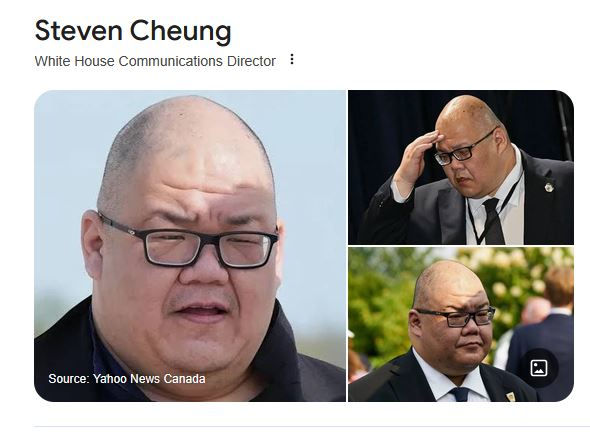
White House Communications Director Steven Cheung is the clearest example. His public statements often read like they were written for an audience of anonymous trolls, not the American public. Instead of addressing facts, he attacks the people asking questions. Instead of clarifying policy, he mocks critics. It’s the 4chan tone, lifted straight into official government messaging.
When the government adopts the communication style of anonymous message boards, it doesn’t just change politics. It changes the public’s expectations of truth.
The style didn’t stay online — it became institutional
This rhetorical migration is now visible at the highest levels of government. During recent testimony, DHS Secretary Markwayne Mullin repeatedly talked over interviewers, dodged direct questions, and tried to overpower the exchange through sheer volume. The committee chair had to remind him that testimony requires answers, not theatrics.

But that was the point. It wasn’t about informing the public. It was about performing for an audience conditioned to reward aggression over clarity.
This is the same behavior I watched for two years on Truth Social — dominance instead of dialogue, noise instead of truth.
Anonymity is the engine behind the performance
Truth Social’s design mirrors 4chan’s: no real names, no profile photos, no verification. Just slogans, flags, and anonymous handles. And anonymity doesn’t just protect privacy — it enables performance.
It allows people to:
insult without consequence
lie without fear
pretend to be military or law enforcement
posture as “real patriots”
attack anyone who challenges them
I encountered dozens of accounts claiming to be military. But when I asked even basic questions — rank, MOS, unit structure — they fell apart. It wasn’t just lying. It was digital stolen valor.
Foreign actors blend in effortlessly
Anonymity doesn’t just protect Americans. It opens the door to foreign actors. Public reporting has shown that some MAGA‑aligned accounts on X were located outside the United States. That doesn’t mean all anonymous accounts are foreign — but it means the door is wide open.
Foreign influence operations thrive in environments where identity is optional and outrage is rewarded. Truth Social provides both.
“Try acting like a patriot” — and watch the mask slip
To test the authenticity of these anonymous “patriot” accounts, I started using the hashtag #ProveYourAmerican. I wasn’t invoking anything like the Patriot Act. I was saying something much simpler:
If you’re going to wrap yourself in the flag, then try acting like a patriot.
Every time I asked them to prove even the basics — that they were American, that they were military, that they were who they claimed to be — they collapsed. They dodged, deflected, and insulted. But they never answered.
Not once.
It was the easiest diagnostic tool in the world — and they failed it every time.
The OPSEC giveaway
One of the clearest tells that these accounts were not who they claimed to be was their complete lack of understanding of basic security principles. I handled classified communication in the military. I know OPSEC and COMSEC. I know the rules, the violations, the consequences.
So when anonymous accounts claiming to be military insisted that using Signal on an unclassified government system was “no big deal,” the fakeness was obvious.
A real service member — even a junior one — knows better.
That’s when I told them: “You’re not a military person. And if you were, I feel sorry for the service members you lead.”
It wasn’t an insult. It was an assessment.
The fringe didn’t stay fringe — it became the operating system
After two years inside Truth Social, one truth became impossible to ignore:
The communication style of anonymous message boards is now shaping American politics.
Anonymity rewards aggression. Engagement rewards outrage. Identity cosplay rewards loyalty. Foreign actors blend in effortlessly. And political operatives mirror what their audience cheers for.
The result is an information environment where:
truth is optional
performance is everything
patriotism is a costume
expertise is replaced by confidence
and the loudest voice wins
This isn’t just a shift in tone. It’s a shift in governance.
If we want to understand the country we’re living in, we have to understand the platforms that shaped its new political language — and the incentives that keep that language alive.

Comments